
Warning: this contains graphic details and images
Radios crackling under the last amps of juice from dying batteries. Howling winds of winter bursting through every cement crevice, every cracked window. The flicker of candles make up an evanescent glow across countless city blocks in the darkness, where Romanians and their families stood huddled together in fear, wondering what will become of their country tomorrow.
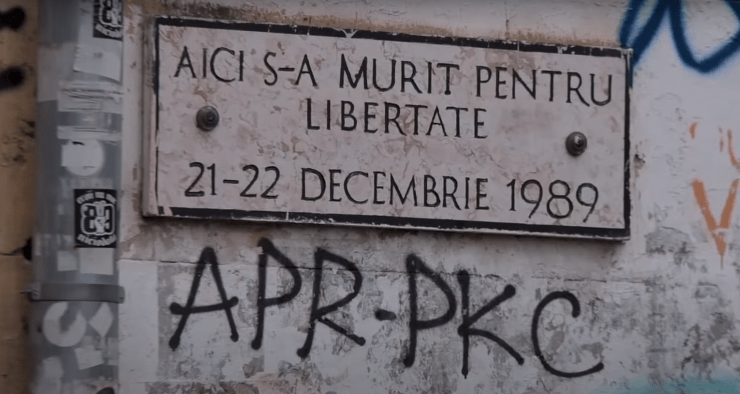
This was 35 years ago today, December 22, 1989. The beginning of the Romanian Revolution.
Like all revolutions, it had all the perfect ingredients, right before the final spark set it all off. For years, Romanians had long supported the Romanian Communist Party, a puppet state installed by the Soviet Union following the fall of the Nazis at the end of the Second World War. At its helm was Nicolae Ceaușescu (pronounced Ceau-shescu), a man who initially came from the extreme poverty and illiteracy of the Romanian countryside, only to become one of the most powerful, richest, and most notorious men in Eastern Europe. A man who Romanians thought impossible that he would ever fall.
For 40 years, this was the case. Yet, ’89 was different. The USSR was on its last legs, and cracks were beginning to form throughout the entire Soviet system. Romania itself saw an entire year of failed promises, poor prospects, rolling electrical blackouts and country-wide restrictions on wheat, propane, coal, clean water and just about everything else the average person needed to survive and feed their family had been taken away.
Grocery stores closed due to empty shelves. Butcher shops shut down due to a lack of any meat supply. In the very early hours of the morning, one could hear the cling and clang of propane cannisters as people lined up in the freezing cold in front of the propane truck, often still in their pajamas, to get a bit of juice so they can get by for another day or two.

In such defying misery, human tolerance can only be tested for so very long before the will to carry on snaps.
Soon enough, pockets of unrest began to take shape. People came out into the streets, demanding that their basic rights be obeyed and respected. They were tired of sitting for days in cold, bitter darkness with no electricity. Tired of being hungry and denied every single possible amenity imaginable. They were tired of the Ceaucescus, the Russians and their stupid communism, and the way Romanians were treated like an ant farm.
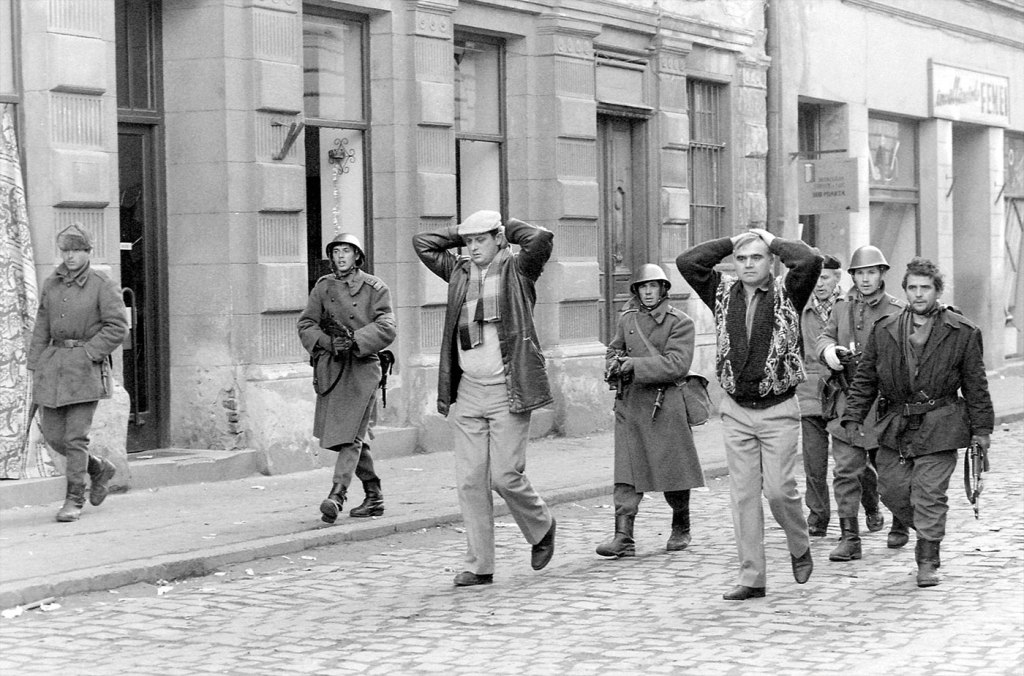
Documented discourse was first seen in the city of Iasi in the east, then it spread to Timisoara in the west, second-biggest city in the country. A dozen disgruntled few turned into several dozen, and that turned into hundreds, then thousands. State security forces (known as Securitatea) attempted to contain these “aspiring revolutionists” using what they knew best: violence and lethality. On December 17, in Timisoara alone, around 100 die in the early stages of the uprising, and hundreds more are arrested or detained.

Within days, news of the growing unrest across Romanian cities, along with the massacre in Cluj and Timisoara, had reached the Romanian capital, Bucureşti (Bucharest).
It was at this point that, after soon returning from his trip to Iran, Ceaucescu called for a mass rally in the city’s University Square; the same place he had used to “unite” Romanians and make his exaggerated proclamations upon the nation.
Little did he know however, that this growing mob, this ocean of people was, in fact, no longer “his.”
“Listen to me!” He shouted down from his palatial balcony. But they wouldn’t listen. They were too hungry. Too tired. Too cold. Too angry. Words like “liar!” and “down with communism!” started echoing from among the crowd. At first, he thought he had captured the crowds. Only a bit later did he realize, he had finally lost control.
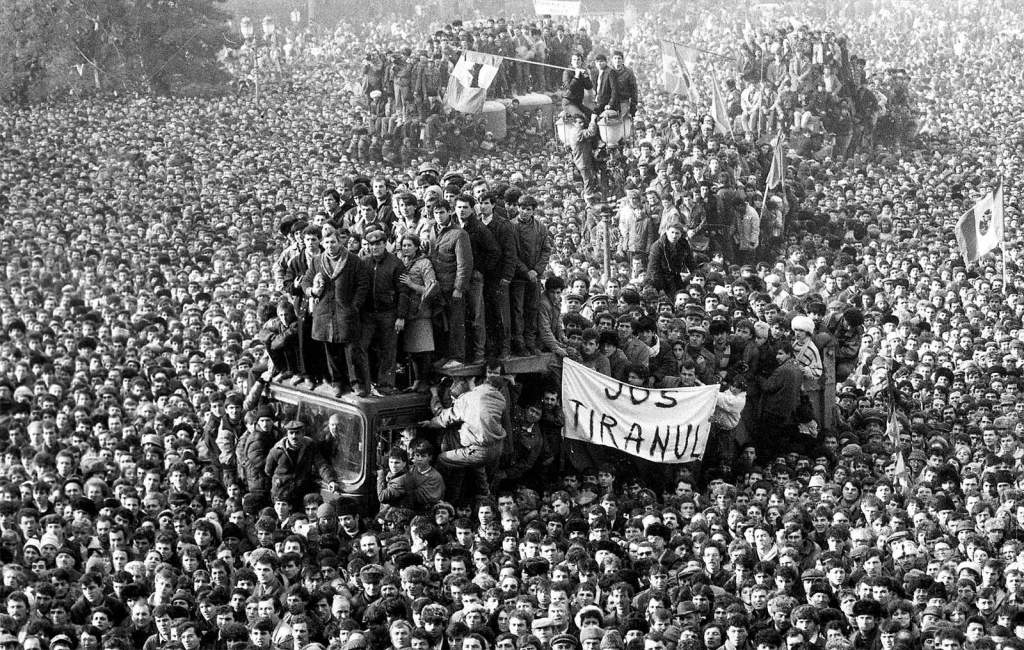
So, he did what any power-hungry, delusional, panicked dictator would do; he ordered his security forces to kill everyone in the square and regain order, by any means necessary and retreated inside his fortified residence. Yet, by a historic twist, the Romanian Army decided to side itself with the people and began aiming its guns towards the security forces and loyalists to the regime.
All-out civil war breaks out.
Chaotic battleground
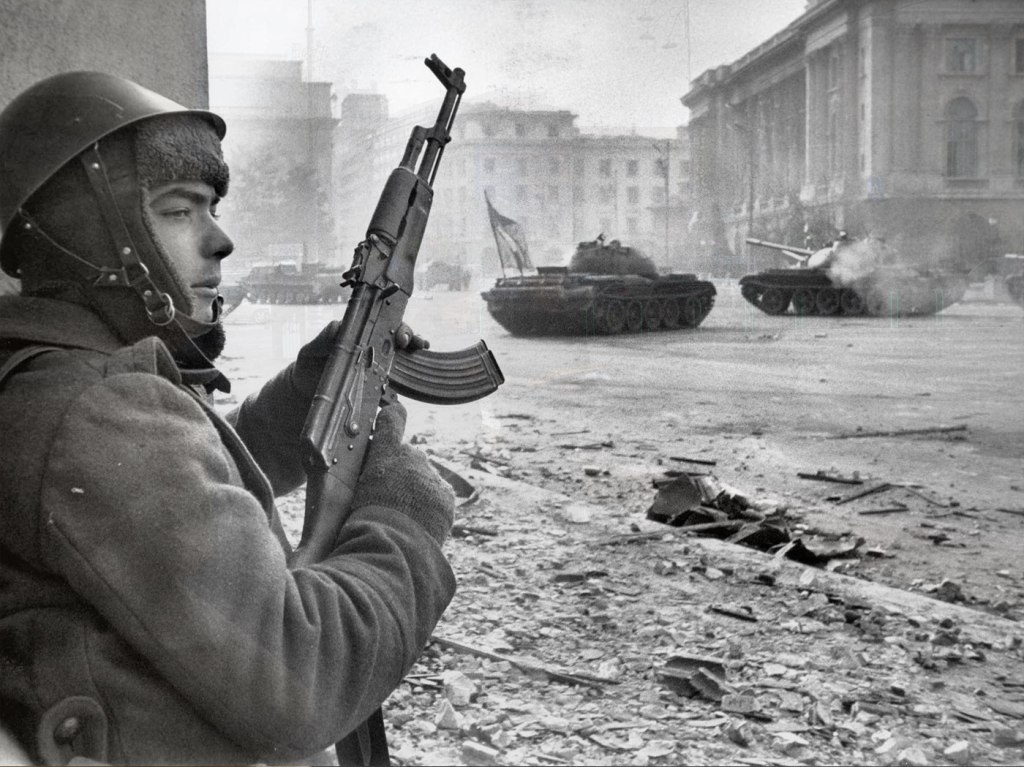
The days that followed December 22 were that of bloody conflict and carnage. The Romanian Army had thrown a rifle in just about anybody’s hands to help overthrow the Securitatea, but no structure, no strategy, and no direction was implemented, resulting in many civilian losses. Though well-intentioned, many were unnecessarily caught up in the fire and instantly killed or maimed, as there was little indication of who was foe and who was friend.
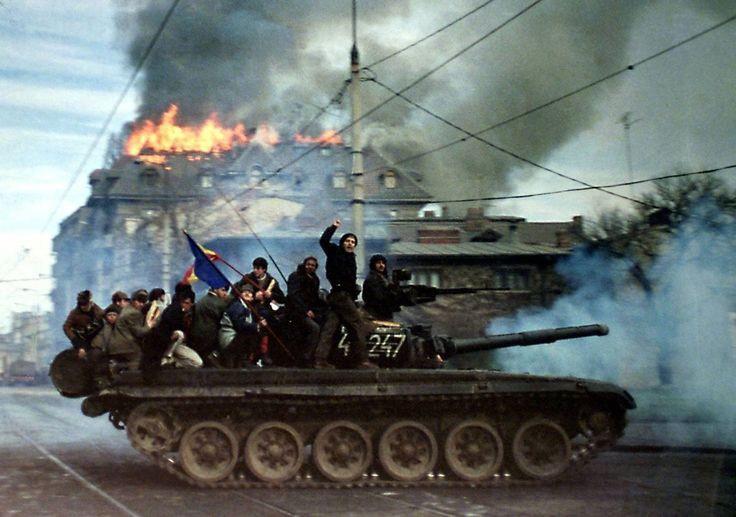
After being holed up in his gargantuan residence (known as the People’s Palace) Ceaucescu and his wife Elena decided to make a run for it by helicopter the following morning. Only, the helicopter would not suddenly bank towards the safety they hoped for, but towards a small airfield near an army barracks just outside the city. There, a mock trial would await them, where they’d be executed live on national television.
The “trial” lasted only about five minutes, where they were deemed guilty and ordered for death by firing squad. Elena, his wife, was reportedly shouting expletives at the soldiers, and both were tossing threats to all the army personnel, saying their lives and their families would never be safe and no solace would ever come to them should harm come to the Ceaucescus. A video camera stood before a small brigade of soldiers, loaded up with AK-47 rifles, each carrying 30 rounds of bullets. Funny enough though, in the midst of the chaos and excitement, one soldier let go of the trigger a little too early.
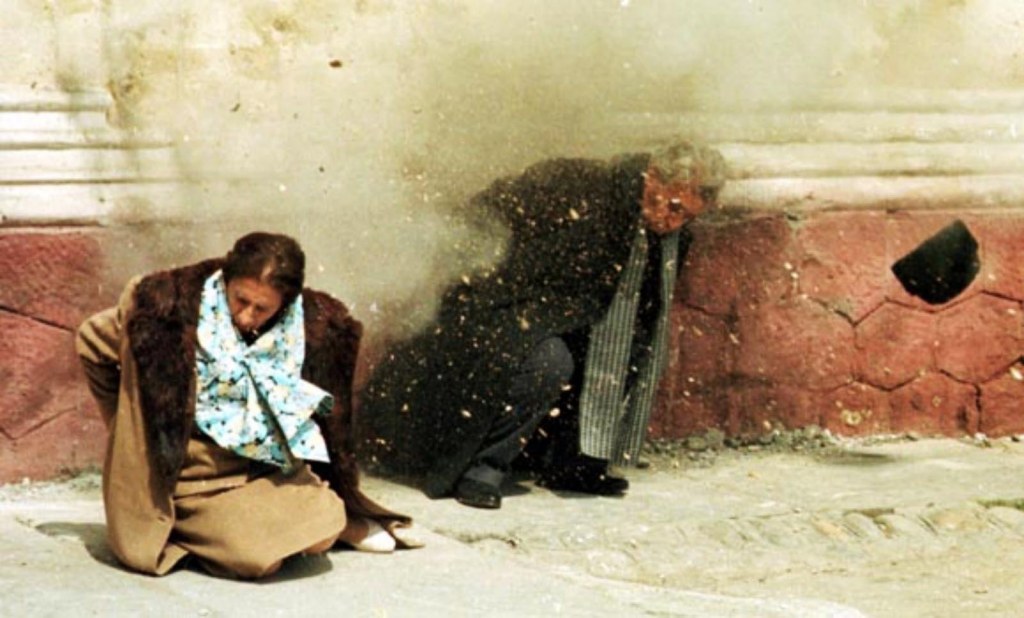
And the camera wasn’t even rolling. Oops.
In a morbid twist, the bullet-riddled bodies of the Ceaucescus were propped up against the wall again, and fired upon again, this time with the video rolling… little did the public know at the time that they were already long dead by the time the footage hit the airwaves.
By the time the news broke of the dictator’s fall, Ceaucescu’s Securitate forces had all but surrendered or were killed in the firefight; some even took up arms against their own colleagues. Romania was on cloud nine, high on its own euphoria and excitement that, for the first time in nearly 60 years, it was free from any sort of dictatorship or foreign power.
Love, hope and glowing optimism was thick in the cold winter air.

The “weight of democracy “
By this point, the euphoria of victory was just about gone, and January 1, 1990 threw Romanians against a harsh reality. While free, no one understood what freedom really was. There was no longer any government that told people what to do or not do. Thousands had also perished in the conflict, with families and homes broken and scattered to the wind, just days before Christmas.
In the Romanian Parliament, there too was a facade of false optimism. The Ceausecus were swiftly replaced by Nicolae’s former right-hand man, Ion Iliescu, a Soviet sympathizer and skilled manipulator, who was recently found to have been one of the driving forces behind the revolution, and his former boss’ downfall.
While no longer communist however, Romania was a shell-shocked and confused nation throughout much of the 1990s and early 2000s. Much of its identity was robbed by Soviet and communist ideology, so it looked towards the Western world for aspirations of freedom and modern society. Unfortunately, much of these aspirations also became a breeding ground for corruption, especially for former Securitate agents who had become self-professed “businessmen” overnight, by stealing untold millions of Euros and starting up shady businesses with former state money.
In other words, despite the unnecessary spill of blood in the streets in December of ’89, Romania had remained a grey, poor and miserable country, where the average Romanian continued to struggle to make ends meet and put a roof over his head.
Romania and what remains
Today, nearing the edge of 2024, Romania is no better off it really was 35 years ago. Corruption remains rampant, and Romanians continue their ever-lasting struggle for survival, to get ahead, get a good education and make something of their lives.
My parents decided enough was enough in 1997. Struggling to make ends meet, an engineer and university professor between them, they began preparations for our departure from the country in hopes for a better future. In November 1998 we left Romania behind, along with our culture, our language, our family, our friends, and everything else in-between.
Now, in the midst of everything happening in the world today, between the failing democracies, the rise of right-wing extremism, and the freedom that is being taken for granted… I hope and wonder, that perhaps all those young people, all those “rebels” – who wanted everyone to be free of chains and oppression, to have a fair chance at life, who took to the streets of Timișoara, Bucureşti and Iași… died for something worthwhile.
 octaviauto.com