
Each day, we go about our daily lives like clockwork. Wake up, get ready, work, smile, cope. Get a questionable sleep and then repeat.
The endless spin of the same game over and over again has, without doubt, eroded at morale, willpower and purpose. Yet this itchy, uncomfortable blanket of malaise we find ourselves covered by is so much more – it is the terminal sign of a civilization in decline, rapidly speeding its way towards its own destruction.
New sparks of conflict and violence fuel the ever-profitable war machine globally, with more guns, more bullets, more bombs, more tanks, more fighter jets and more body bags being filled than ever before. Medieval epidemics once again sizzle quietly under the surface, perpetuated by mass ignorance, misinformation and online-driven hysteria. Social media rots the minds of millions with hidden messaging, addiction, sex, and rampant consumption of useless objects made by the lowest bidder, for the lowest buyer. And of course, the unchecked and unmitigated growth of artificial intelligence in the shadows, with society-wide impacts imminent or already here.
Those are just the cliff notes. This rot, degeneration, de-evolution, putrefaction, whatever you want to call it – runs deeper than everything I just mentioned. And no need, my dear reader, for the aluminum hat; this is not by any means science fiction, conspiracies or fabrications. No, the reality is more than enough to make you recoil in shock and disgust.

It doesn’t take a conspiracist to see the symptoms of an ill society and a culture that thrives on broken ideals. We live in a world of “me first” – my money, my house, my car, my family, my kids, my job, my stuff, my street. Me, me, me. Everyone is fighting for their own little square in this world of what they perceive as a sort of personal freedom; that if they work hard enough, suck up enough, screw over others enough, they will be ahead of the game. This game, the shameless lie is the American Dream; the white picket fence, the big house, the smiles on everyone’s faces, and the abundance for all… as long as they believed. In themselves… and in God.
But what if – and bear with me – what if these are all fabrications; what if we’re all just cockroaches on top of a big rock hurtling at millions of miles per hour through a vast, empty, black vacuum – one that couldn’t give two fucks less if any of us lived or died. It is through centuries of bashing our heads against this existential question that we’ve found ways to cope; religion, community, material gain. That perhaps, to own anything, to have control over anything, we ultimately have control over our lives. It’s easy to believe, to be pulled into its allure, its beauty. At its core, human society is indeed beautiful in its many shapes and forms.
Similar beauty exists at the core of various political structures too. Capitalism allows everyone to find their own way and be prosperous; that the average Joe can reach that white picket fence too, not just John, up on his high golden chair. Socialism gives everyone a shot at a good life, a free life to pursue the living part of it, with free education, free housing and free services to take care of the rest.
In the 10,000 or so years documented history of human society, all have worked, all have failed, in some shape or form.
And regardless of which side of the modern Iron Curtain you live on, guaranteed there is a catch in pretty much every political system. The Capitalists say, “you make your own world through hard work” – yet all we’ve seen is a world of cheap opportunists and overnight-billionaires take all for themselves and give nothing back. On the other end, the Socialists and Communists say, “we’re giving everyone a chance to live a good life” – yes, by bending the rules to your own liking, at the expense of human lives. Oh, and we’ll shoot you and your family in the face if you say anything against us.

Swell. So we’ve blown every political system. That’s not new at all. What is new however, is that we’ve reached a sort of breaking point as a civilization. Every political party, every politician, every government – is universally disliked or downright hated. And not without reason either.
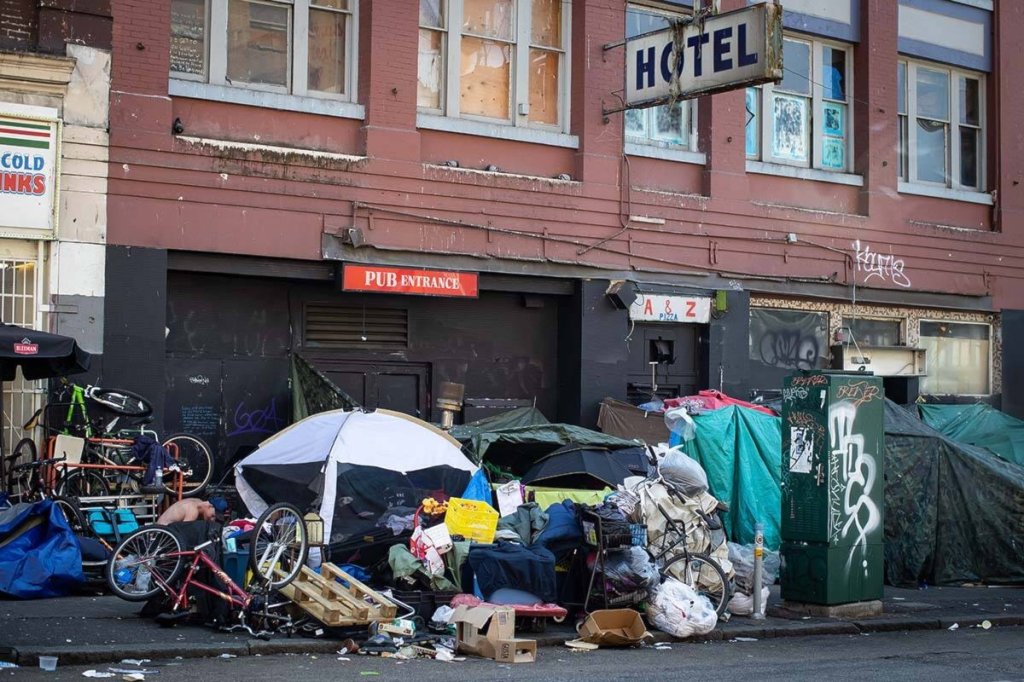
British Columbia, for example. One of the most resource-rich, highest-taxed, and with the most accumulation of overall wealth of any province in Canada per capita, now faces one of its largest budget deficits in its known history – tallying in the billions of dollars. People are living in shanty-town homes worth millions of dollars, but cannot afford to move and live paycheque to paycheque. Streets of B.C.’s biggest cities, Victoria and Vancouver, are full of poverty, suffering and addiction at every streetcorner.
Yet the malls are full. Parking lots are engorged and bursting. Everyone’s driving the hottest and latest piece of shit $100,000 SUV or pickup truck. People drop $1,500 on the latest cellphone or $800 on the latest Lego set. No one asks anymore, is this worth it, do I truly need this. They just pay it, no questions asked. They’ll work one, two, three, four, five jobs.
You gotta wonder, what the fuck is happening. If everyone is broke, overworked and miserable, where is all the money coming from? Who is it going to?
Well, unless you’re savvy with investments, have an inheritance of some sort or are lucky to receive an extravagant yearly salary, it’s called debt. Credit cards, lines of credit, loans… banks are giving people the longest stick possible to attain the things they cannot possibly ever afford, because hey, it’s just money, right? Um, no. It’s their money. And you owe them back every penny. With interest. And they’ve perfected this wonderful rat trap in such a way that they’ll keep you hooked to it for as many years as they possibly can, until there’s nothing left of the desiccated corpse that is your bank account.
Don’t take my word for it either. At the end of 2020, arguably the strangest and hardest year in recent modern human history, the average Canadian owed $72,950 in debt, excluding mortgages, according to Equifax. Total consumer debt in Canada reached $2.56 trillion at the end of 2024, a 4.6 per cent increase over 2023.
Who, in their mind, is going to pay all that back? In how many lifetimes? How many of you will live past 100? Anyone living past 300? Realistically, how many will live unscathed past 65 to even enjoy their crappy pension with their hips still intact?
Now, hang on to that little nugget. Add the fact that the cost of living has remained high since the pandemic and was climbing quickly even well before that. Still continues to climb. Salaries and income have gained too, but at a much slower and lower rate. Every year, the latest and greatest continues to come out. Cars, phones, shoes, toys, latest staples in fashion, latest fads in health and beauty, buy now, don’t miss out, pre-order, it’s almost gone, limited quantities!
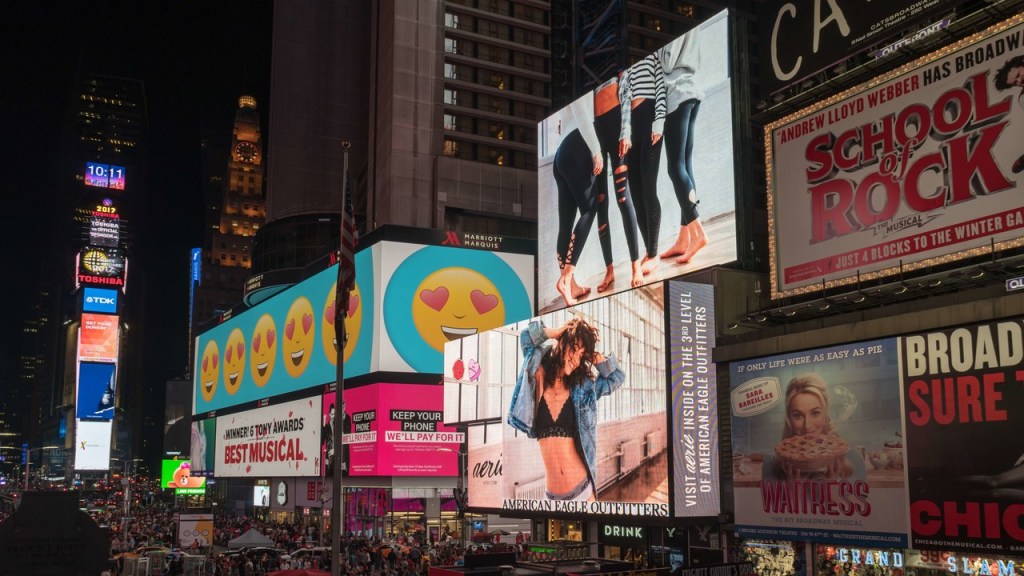
Truth is, it’s all shit. We all consume, including yours truly – but it feels like there’s an even bigger thirst and appetite for consumption nowadays; we never quite fell out of the pandemic mentality of, “well, I am suffering, I am broke, I am alone, I will die one day, what difference will this make.”
Turns out, that mantra has made certain companies, and even fewer people, very, very rich. Corporations knew they had a bull by its horns when they realized they now had a mass population of needy, anxious zombies ready with their nearly-maxed out credit cards to pay whatever it took to get their hottest item in their sweaty hands at the click of a button. “Because I work hard, damnit, because my family deserves the very best.”
The best. The greatest. My world. My family. My job. My money. I’ve seen it myself where this me society has taken us.
A man urinating on the door of a busy bus terminal during morning rush hour laughing uncontrollably with his genitals exposed. A woman sitting disheveled in her own vomit near a pharmacy entrance, whistling loudly and yelling things at unaware shoppers. Another man standing still on the sidewalk, his torso limp dangling down to his knees like a puppet whose strings were cut. Just steps away, a potential corpse lies encased in a dirty sleeping bag pressed against the window glass. These are scenes of the reality unfolding before our very eyes every single day.
“They made their choice, why should we support such… animals,” is a phrase I commonly hear all the time from people; it closely follows the first narrative that these individuals became this way because they didn’t try hard enough, they didn’t work hard enough, didn’t have a sense of family, and weren’t “normal” like the rest of us. I ask though, often rhetorically, don’t you think that maybe when that person was born, that they were loved and adored as well as you were? That, perhaps, you, me, your coworkers, your friends and family, are all just one bad day, one bad misstep in the system, away from falling into the meatgrinder ourselves.
And that’s just here in a “developed” country like Canada. Think of the poverty and violence happening in places far less fortunate right now, some caught in the middle of political war games at the behest of world superpowers and the tragic loss of countless human lives. Yet not even a world away, one person, one single person, awaits their $400 million yacht to be furnished and finished for its maiden voyage to a private island in the Caribbean.

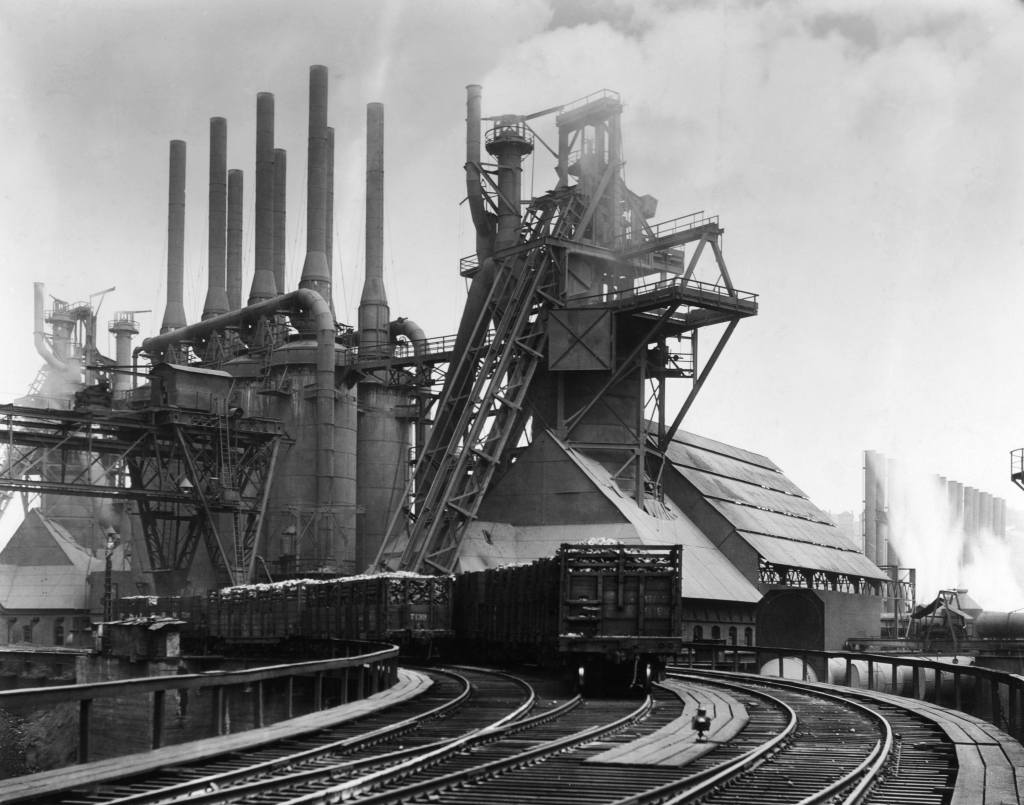
Not even 150 years ago, the Gilded Age taught us that the fast accumulation of wealth by a relative few people was dangerous to society. That these one-percenters had the means and the power to shift entire industries in their favour, play with people’s lives like a baby in a bathtub, infiltrate the government, even control a government and, ultimately, a nation (sound familiar?). These were not inventors, not geniuses, they didn’t create anything – they were simply opportunists, knowing when to strike and slap on their monopoly over a certain something. Whether it was mining, railways, shipping, or downright slavery, these people made literal mountains of money, while the rest toiled in hot and dirty boiler rooms, vast, muddy fields and in dangerous plants and factories working long hours for next to nothing. Any demands for better treatment, fair pay and safety fell on deaf ears or were squashed with violence. It was these early millionaires who set the standard for the mentality of never having enough and viciously protecting lifestyles of excess, which thrives happily within our society to this day.
So, I ask, when, and what, really, is enough? We see the evidence right in front of our eyes that things are not okay. That we are not okay. That mental health concerns and addiction remains at a constant high. That our image of what our lives should be is completely distorted, twisted and corrupted. That the great divide between rich and poor has reached a colossal void that may never be crossed ever again. That what we are told to consume are the schemes and games of the same few who play us for their own personal financial gain and profit.
When does it stop then? That, I guess, is the million dollar question. We’ve already reached a sort of interval and crossroad in terms of what our planet and our civilization can sustain – some say we have even crossed it years ago and are already in rapid freefall. Thing is, the power still remains within ourselves to change things around, as impossible as it may seem right now. Corporations, the one percent, governments… all rely on us; the average Joes. They both control us and need us for their own survival.
Which begs the question: what if we didn’t need them? What if we all bought used cars from now on? What if we stopped buying things made in other countries and only consumed local? What if we stood up to our politicians and held them directly responsible for the promises they made when we trusted them with our votes? What if we banded together to help people before they fell into the meatgrinder of the social welfare system? What if we had less CEOs, less hierarchy and better pay for the rest of us? Absolutely no one in this world needs the world to be perfect, because it never will be; but it at least needs to be sustainable; if not for ourselves today, at least for the generations that follow behind us.
Otherwise nothing will ever change, unless we ourselves bring what little power we can back to ourselves.
 octaviauto.com